Wire report
Award-Winning Researcher Trains Robots to Make Educated Guesses
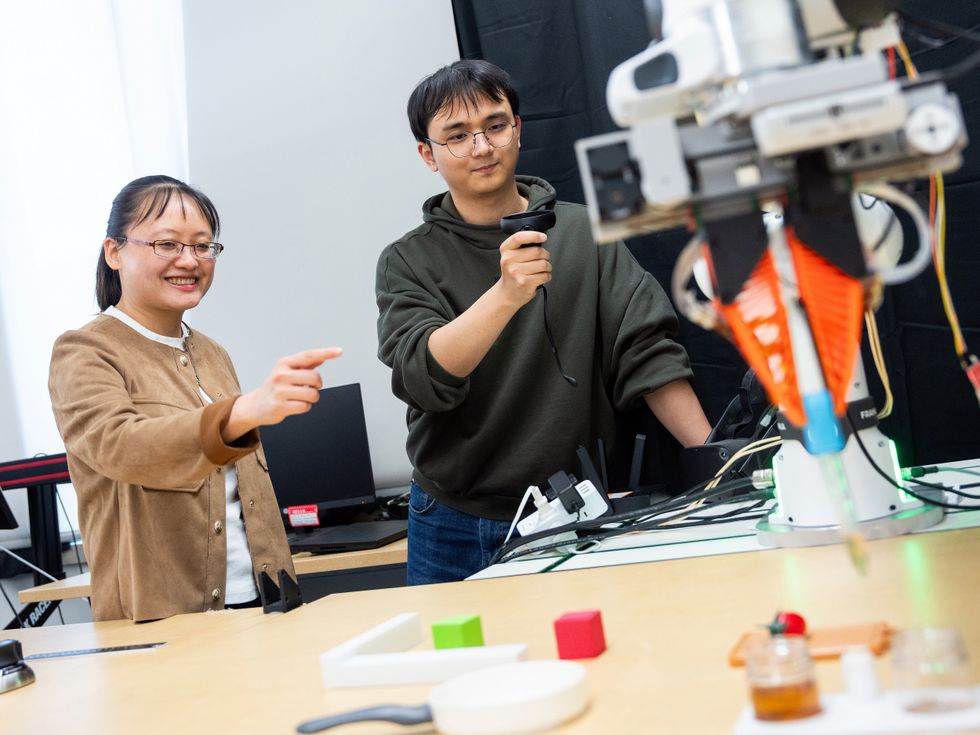
Yen-Ling Kuo always wanted to understand how things worked. When she was growing up in Taiwan, reading the story of Michael Faraday in elementary school piqued her curiosity about the natural world. During that time, she was introduced to Logo , a computer program with a turtle cursor to help children learn basic coding through hands-on experimentation. It was Kuo’s introduction to programming logic. Yen-Ling Kuo Employer University of Virginia in Charlottesville Title Assistant professor of computer science Member grade Member Alma maters National Taiwan University; MIT In high school she learned the capacity computers held. She could write programs that completed tasks independently, she realized. “Once I discovered how powerful computers could be,” she says, “I knew I wanted to focus on using them to solve real-world problems.” Kuo, an IEEE member, never lost her interest in the “how”
coverage / Wire report
Get updates, read source context, send useful records, share the story, or support the reporting work from the reading page.
Yen-Ling Kuo always wanted to understand how things worked. When she was growing up in Taiwan, reading the story of Michael Faraday in elementary school piqued her curiosity about the natural world. During that time, she was introduced to Logo , a computer program with a turtle cursor to help children learn basic coding through hands-on experimentation. It was Kuo’s introduction to programming logic. Yen-Ling Kuo Employer University of Virginia in Charlottesville Title Assistant professor of computer science Member grade Member Alma maters National Taiwan University; MIT In high school she learned the capacity computers held. She could write programs that completed tasks independently, she realized. “Once I discovered how powerful computers could be,” she says, “I knew I wanted to focus on using them to solve real-world problems.” Kuo, an IEEE member, never lost her interest in the “how”
Check the original link, updates, and responses when a detail is contested.
Open topic or search related wording such as records, sources, agencies, dates, and locations.
What happened
According to IEEE Spectrum’s linked item, Award-Winning Researcher Trains Robots to Make Educated Guesses, Yen-Ling Kuo always wanted to understand how things worked. When she was growing up in Taiwan, reading the story of Michael Faraday in elementary school piqued her curiosity about the natural world. During that time, she was introduced to Logo , a computer program with a turtle cursor to help children learn basic coding through hands-on experimentation. It was Kuo’s introduction to programming logic. Yen-Ling Kuo Employer University of Virginia in Charlottesville Title Assistant professor of computer science Member grade Member Alma maters National Taiwan University; MIT In high school she learned the capacity computers held. She could write programs that completed tasks independently, she realized. “Once I discovered how powerful computers could be,” she says, “I knew I wanted to focus on using them to solve real-world problems.” Kuo, an IEEE member, never lost her interest in the “how”
Context
The development sits in VINI’s Technology coverage for readers following technology, science, product policy, markets, infrastructure, and the public consequences of innovation. The original report is linked so readers can check the source account, follow later updates, and compare new coverage against the first published record. The linked item is dated 2026-06-12T18:00:01+00:00.
What to watch
Open questions include whether primary sources issue follow-up statements, whether local or market impacts become clearer, and whether additional reporting changes the timeline or adds material context.
Source
Primary source: Award-Winning Researcher Trains Robots to Make Educated Guesses via IEEE Spectrum. VINI cites and links the source; it does not reproduce the publisher’s full article text without rights clearance.
Keep following
This file can keep developing
VINI News uses reader tips, public records, right-of-reply requests, corrections, and follow-up reporting to keep important stories current.
Support and subscriptions never buy coverage, placement, suppression, or corrections.
This VINI report keeps the original publisher link available and does not republish third-party article bodies without rights clearance. 1 reference listed.
Source links
- Award-Winning Researcher Trains Robots to Make Educated GuessesIEEE Spectrum - 2026-06-12T18:00:01+00:00
Reader comments
Moderated discussion
Comments are open to authenticated approved accounts, screened for spam and abuse, and published only after newsroom moderation unless editors change the story control.
No approved comments yet.
Substantive, civil comments can be submitted by approved account holders.