Wire report
Detect Dark Matter’s Mark From Your Backyard
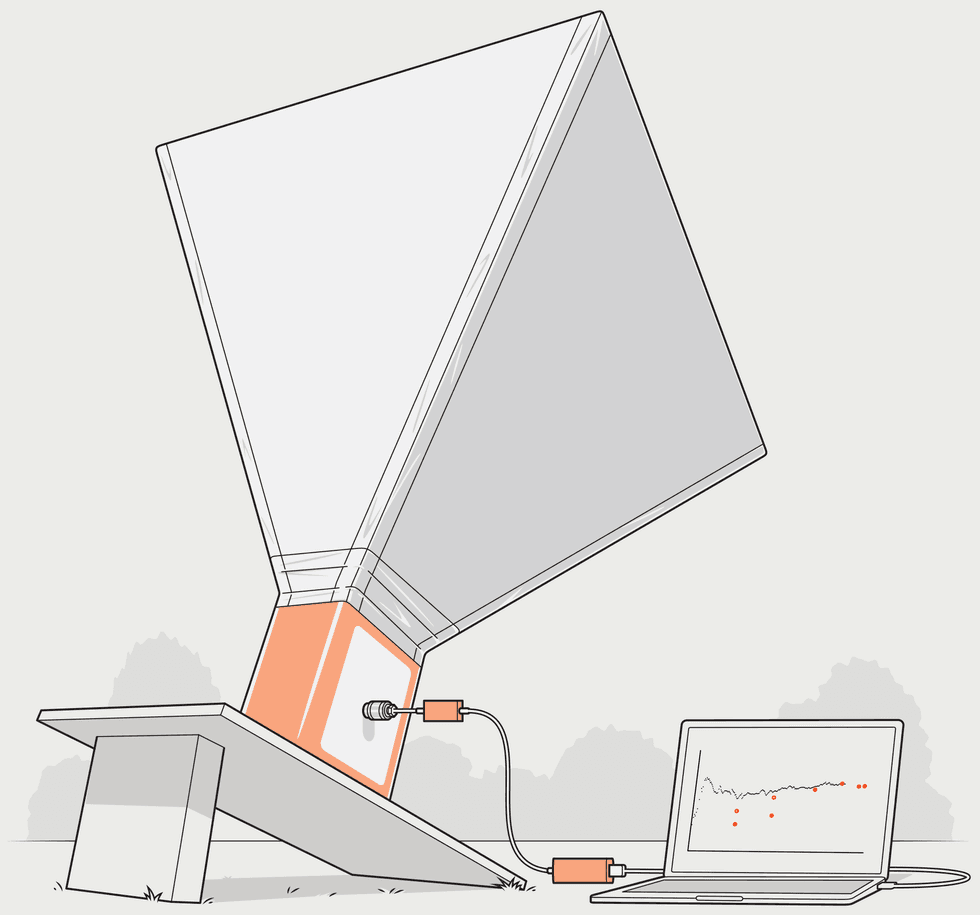
If you’re wondering what dark matter is, you’re not alone. Astronomers don’t know. But they’ve determined that this invisible material must be far more abundant than the stars and nebulas that they can see. They’ve surmised as much from observing the gravitational effects of all this perplexing dark stuff, launching a decades-long campaign to understand its nature. I recently learned that it is possible to sense the presence of dark matter using a small radio telescope such as the Discovery Dish covered in these pages last year. The trick is to know what observations to collect and how to analyze them. I’ll sketch that out below, but first let me describe the homemade radio telescope I put together for this project. It’s a pyramidal-horn antenna, not unlike the horn antenna first used in 1951 to detect the 1,420.4-megahertz radio emissions from interstellar clouds of neutral hydrogen in
coverage / Wire report
Get updates, read source context, send useful records, share the story, or support the reporting work from the reading page.
If you’re wondering what dark matter is, you’re not alone. Astronomers don’t know. But they’ve determined that this invisible material must be far more abundant than the stars and nebulas that they can see. They’ve surmised as much from observing the gravitational effects of all this perplexing dark stuff, launching a decades-long campaign to understand its nature. I recently learned that it is possible to sense the presence of dark matter using a small radio telescope such as the Discovery Dish covered in these pages last year. The trick is to know what observations to collect and how to analyze them. I’ll sketch that out below, but first let me describe the homemade radio telescope I put together for this project. It’s a pyramidal-horn antenna, not unlike the horn antenna first used in 1951 to detect the 1,420.4-megahertz radio emissions from interstellar clouds of neutral hydrogen in
Check the original link, updates, and responses when a detail is contested.
Open topic or search related wording such as records, sources, agencies, dates, and locations.
What happened
According to IEEE Spectrum’s linked report, Detect Dark Matter’s Mark From Your Backyard, If you’re wondering what dark matter is, you’re not alone. Astronomers don’t know. But they’ve determined that this invisible material must be far more abundant than the stars and nebulas that they can see. They’ve surmised as much from observing the gravitational effects of all this perplexing dark stuff, launching a decades-long campaign to understand its nature. I recently learned that it is possible to sense the presence of dark matter using a small radio telescope such as the Discovery Dish covered in these pages last year. The trick is to know what observations to collect and how to analyze them. I’ll sketch that out below, but first let me describe the homemade radio telescope I put together for this project. It’s a pyramidal-horn antenna, not unlike the horn antenna first used in 1951 to detect the 1,420.4-megahertz radio emissions from interstellar clouds of neutral hydrogen in
Context
The development sits in VINI’s Technology coverage for readers following technology, science, product policy, markets, infrastructure, and the public consequences of innovation. The original report is linked so readers can check the source account, follow later updates, and compare new coverage against the first published record. The linked report is dated 2026-07-30T14:00:03+00:00.
What to watch
Open questions include whether primary sources issue follow-up statements, whether local or market impacts become clearer, and whether additional reporting changes the timeline or adds material context.
Source
Primary source: Detect Dark Matter’s Mark From Your Backyard via IEEE Spectrum. VINI cites and links the source; it does not reproduce the publisher’s full article text without rights clearance.
Keep following
This file can keep developing
VINI News uses reader tips, public records, right-of-reply requests, corrections, and follow-up reporting to keep important stories current.
Support and subscriptions never buy coverage, placement, suppression, or corrections.
This VINI report keeps the original publisher link available and does not republish third-party article bodies without rights clearance. 1 reference listed.
Source links
- Detect Dark Matter’s Mark From Your BackyardIEEE Spectrum - 2026-07-30T14:00:03+00:00
Reader comments
Moderated discussion
Comments are open to authenticated approved accounts, screened for spam and abuse, and published only after newsroom moderation unless editors change the story control.
No approved comments yet.
Substantive, civil comments can be submitted by approved account holders.