Wire report
Zap Rocks. Add Water. Get Clean Hydrogen
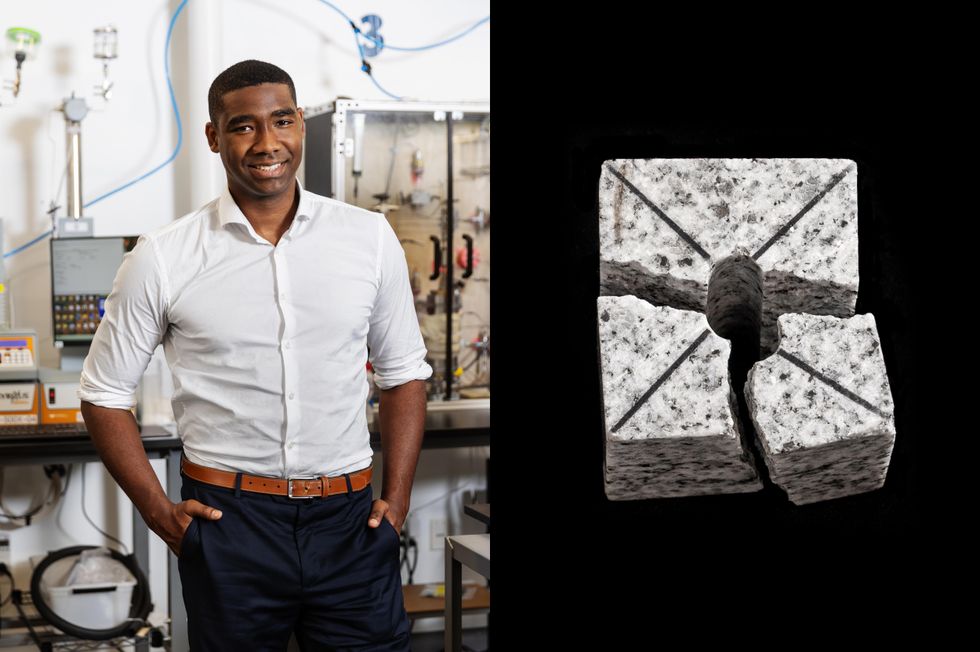
In a tranquil Boston suburb , on the far edge of a horse farm, where pasture gives way to woods, a crane lowers an enormous electrode into a borehole. The electrode, a half-meter-long cylinder with copper-tipped arms to ensure good contact with the borehole walls, descends—deeper, deeper—through layers of spongy sandstone to the hard, marbled roots of an ancient mountain range hundreds of meters below ground. Here the rock is tight; there are few cracks for water or gases to flow. But that’s about to change. A stone’s throw away, a second electrode—a twin of the first—has been fixed in another borehole at the same depth. From above ground, a pair of high-voltage generators cabled to the two electrodes fires a series of pulses. Tsss!…Tsss!…Tsss!…Tsss!…Tsss!…. Each discharge, heard faintly at the surface, is like a miniature, subterranean lightning strike. The rock between the electrodes h
coverage / Wire report
Get updates, read source context, send useful records, share the story, or support the reporting work from the reading page.
In a tranquil Boston suburb , on the far edge of a horse farm, where pasture gives way to woods, a crane lowers an enormous electrode into a borehole. The electrode, a half-meter-long cylinder with copper-tipped arms to ensure good contact with the borehole walls, descends—deeper, deeper—through layers of spongy sandstone to the hard, marbled roots of an ancient mountain range hundreds of meters below ground. Here the rock is tight; there are few cracks for water or gases to flow. But that’s about to change. A stone’s throw away, a second electrode—a twin of the first—has been fixed in another borehole at the same depth. From above ground, a pair of high-voltage generators cabled to the two electrodes fires a series of pulses. Tsss!…Tsss!…Tsss!…Tsss!…Tsss!…. Each discharge, heard faintly at the surface, is like a miniature, subterranean lightning strike. The rock between the electrodes h
Check the original link, updates, and responses when a detail is contested.
Open topic or search related wording such as records, sources, agencies, dates, and locations.
What happened
According to IEEE Spectrum’s linked report, Zap Rocks. Add Water. Get Clean Hydrogen, In a tranquil Boston suburb , on the far edge of a horse farm, where pasture gives way to woods, a crane lowers an enormous electrode into a borehole. The electrode, a half-meter-long cylinder with copper-tipped arms to ensure good contact with the borehole walls, descends—deeper, deeper—through layers of spongy sandstone to the hard, marbled roots of an ancient mountain range hundreds of meters below ground. Here the rock is tight; there are few cracks for water or gases to flow. But that’s about to change. A stone’s throw away, a second electrode—a twin of the first—has been fixed in another borehole at the same depth. From above ground, a pair of high-voltage generators cabled to the two electrodes fires a series of pulses. Tsss!…Tsss!…Tsss!…Tsss!…Tsss!…. Each discharge, heard faintly at the surface, is like a miniature, subterranean lightning strike. The rock between the electrodes h
Context
The development sits in VINI’s Technology coverage for readers following technology, science, product policy, markets, infrastructure, and the public consequences of innovation. The original report is linked so readers can check the source account, follow later updates, and compare new coverage against the first published record. The linked report is dated 2026-08-11T13:00:01+00:00.
What to watch
Open questions include whether primary sources issue follow-up statements, whether local or market impacts become clearer, and whether additional reporting changes the timeline or adds material context.
Source
Primary source: Zap Rocks. Add Water. Get Clean Hydrogen via IEEE Spectrum. VINI cites and links the source; it does not reproduce the publisher’s full article text without rights clearance.
Keep following
This file can keep developing
VINI News uses reader tips, public records, right-of-reply requests, corrections, and follow-up reporting to keep important stories current.
Support and subscriptions never buy coverage, placement, suppression, or corrections.
This VINI report keeps the original publisher link available and does not republish third-party article bodies without rights clearance. 1 reference listed.
Source links
- Zap Rocks. Add Water. Get Clean HydrogenIEEE Spectrum - 2026-08-11T13:00:01+00:00
Reader comments
Moderated discussion
Comments are open to authenticated approved accounts, screened for spam and abuse, and published only after newsroom moderation unless editors change the story control.
No approved comments yet.
Substantive, civil comments can be submitted by approved account holders.